-3.png?width=1200&name=Untitled%20design%20(27)-3.png "Untitled design (27)-2")
A Category That Continues to Matter
The global soft drinks category is evolving in multiple directions at once. On one side, there is a clear shift toward functionality, reduced sugar, and more intentional consumption. On the other, there remains a strong and persistent demand for products built around taste, enjoyment, and variety. Flavored carbonated soft drinks sit precisely at the intersection of these dynamics, continuing to play a central role in how consumers engage with the category daily.
Despite increasing attention toward health-driven segments, the broader carbonated soft drinks market remains highly resilient. According to Statista, the category continues to show stable global growth, supported by its accessibility, affordability, and ability to deliver immediate sensory satisfaction. Within this landscape, flavored soft drinks represent an important layer, not as a replacement for cola, but as an expansion of choice.
Variety as a Driver of Behavior
What distinguishes this segment is the way consumers interact with it. Unlike traditional cola, where brand loyalty tends to be more entrenched, flavored soft drinks are driven by exploration. Consumers are more open to switching between flavors, trying new combinations, and engaging with brands that offer variety.
This behavior is not incidental.
Research from Innova Market Insights consistently highlights flavor diversity as a key driver of both trial and ongoing engagement in beverages, particularly among consumers seeking more dynamic and experience-led products. In this context, brands do not compete on a single product or a single message, but on their ability to offer a range that feels both coherent and flexible.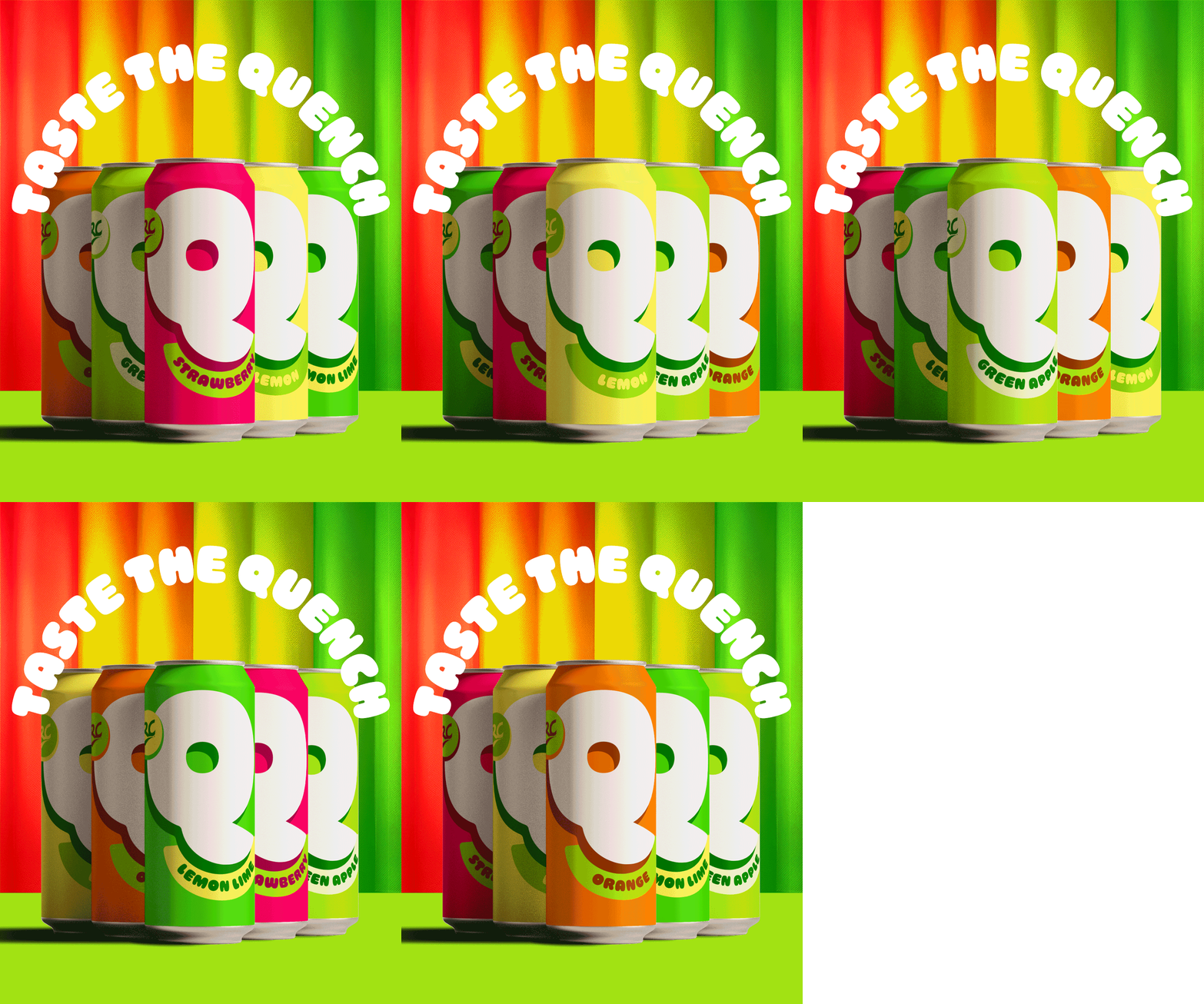
The Reality of the Shelf
The retail environment in which these products compete is highly demanding. The flavored soft drink shelf is one of the most visually saturated spaces in the store, with multiple brands competing for attention within a limited timeframe. In this context, purchase decisions are often made quickly, with limited comparison between options.
Insights from NielsenIQ emphasize the importance of clear visual communication, strong color differentiation, and immediate flavor recognition in influencing purchase decisions. Products that fail to communicate quickly are simply overlooked. In such an environment, visibility is not only about standing out once but about being consistently recognizable across repeated interactions.
Where RC Q Fits
RC Q is positioned to operate precisely within this dynamic. As a fruit-forward carbonated soft drink range, it is designed to expand the experience of refreshment beyond traditional cola, offering a portfolio of flavors that encourages exploration while maintaining consistency across the brand.
By focusing on widely recognized fruit profiles alongside more playful combinations, the brand creates a balance between familiarity and novelty. This allows consumers to move between flavors without leaving the brand, strengthening engagement over time and increasing the likelihood of repeat purchase.
Flavor as a Strategic Tool
In this category, flavor plays a dual role. It drives initial interest, but more importantly, it sustains long-term engagement. Consumers who have multiple taste experiences with a single brand are less likely to switch out of it entirely.
According to Mintel, brands that continuously offer diverse and engaging flavor profiles are better positioned to maintain consumer interest and reduce fatigue. This transforms flavor from a product attribute into a strategic tool that supports retention as much as acquisition.
Expression and Brand Identity
Beyond the product itself, success in this segment is closely tied to how a brand expresses itself. Flavored soft drinks rely heavily on visual identity to communicate energy, personality, and differentiation. Color, design, and tone are not secondary elements, but central to how quickly a product is understood and remembered.
RC Q operates within this expressive space, using bold, vibrant visual language to reinforce its positioning as a dynamic, engaging alternative in the category. In high-choice environments, memorability is directly linked to repeat purchase, making brand identity a critical driver of performance.
A Defined Role Within the Portfolio
From a portfolio perspective, flavored soft drinks serve a distinct purpose. They are not driven by heritage in the same way as cola, nor by functionality, such as energy or better-for-you products. Instead, they expand the range of experiences a brand can offer, allowing it to capture a broader set of consumption occasions.
RC Q strengthens this layer by providing a structured, flavor-led platform that adapts to diverse market preferences while maintaining a consistent identity. This allows bottlers to diversify their offering while remaining aligned with broader category dynamics.
The Opportunity Ahead
As the beverage landscape becomes more fragmented and consumer expectations continue to diversify, the importance of offering variety continues to grow. Consumers are no longer looking for a single solution, but for multiple options that align with different moments, moods, and preferences.
Flavored soft drinks remain one of the most effective ways to meet that demand. RC Q is built to compete in this environment, combining flavor diversity, strong visual identity, and a positioning that encourages ongoing engagement.
For bottlers, the opportunity lies not only in participating in this category but in executing it with clarity and consistency. In a space where consumers are open to exploration but guided by recognition, the brands that succeed are those that can balance both.
Sources
[1] Statista – Global Carbonated Soft Drinks Market Size & Growth
[2] Innova Market Insights – Global Flavor Trends in Beverages
[3] NielsenIQ – Packaging & Shelf Visibility Insights
[4] Mintel – Flavor Innovation & Consumer Engagement